
This section of Part 1 of our three part series that honors the memory of the heroes of the Chetambe war, remembers freedom fighter Wakoli khwa Mukisu. Wakoli is a shujaa who modern Kenya criminally chooses to forget. He was the mastermind of the first phase of the BaBukusu resistance that culminated in victory for BaBukusu in the battle of Lumboka. Meet the man, the legend. A hero who as the Bukusu say: Afwile ebikele ne emurwe babana baliyo.
Unlike Chetambe where if you head down to Webuye you’ll find relics of the scene of the battle, with Mukhweya the task is a lot more onerous. I’d imagine one has to first trace down an elder. Then inquire from the elder if they knew the home of the patriarch who first carried the name Mukhweya. More than a century later, thanks to intermarriage and migration, it might be quite the task. Still, one might find their way to the area now known as Mukhweya. But to identify the exact original home of Baba Nasi Okhwamukewa maybe a tall ask. It is on his land where the battle of Mukhweya is said to have taken place.
Devoid of that, one would have to trace a raised area of land visible from Kabula. This raised land has to be the one lying to the southeast of Mzee Mukisu Kakai’s son’s home in South Mateka. In aid of your quest, it’s beneficial to know that the home of Mzee Kakai’s son is somewhere near the ruins of Lumboka. It’s here at Mukhweya that Namisi (a European or light skinned person) and his fleeing troops encountered Wakoli the son of Mukisu, a feared warrior from the Bayemba clan.
Okhwa Mukisu’s Lineage
Wakoli was the grandson of Mukisa Lufwalula. Lufwalula is the patriarch of the Bukusu clan Bayemba of the Omukhayama door. They are a clan known for their control over fire. Among other things, their power over fire was utilized to forge iron as blacksmiths. The Bayemba are also known for their love of meat. One legend goes that this clan could spit fire. It’s a claim that arose from their use of trickery to woo women.
In this trick, a Omuyemba omukhayama man would hide a piece of fatty meat in their mouth. They would then spit into smoldering ambers, occasioning the piece of fat spit out their mouth to cause a flame when it caught fire. Wakoli’s father, Mukisu, was born in 1866. Therefore, if these dates hold, Wakoli khwa Mukisu was barely out of his teens when he led this revolt against British rule.
WAKOLI NASI MUKISU, THE OMUYEMBA WARRIOR AND FREEDOM FIGHTER
When former Lands Assistant Minister and two-time Bumula Constituency Member of Parliament Hon. Sylvester Wakoli Bifwoli first ran for office, old men in the area who could remember the battles of Lumboka, Mukhweya and the War of Chetambe said to him that the musambwa of his grandfather had descended upon him.
But even before Hon. Wakoli’s time came, there had been his paternal uncle Pascari Nabwana of Kimilili. It’s said that at the end of his reign, to his eldest son, Siundu, Wakoli Okhwa Mukisu handed the gun that felled Namisi. And to one of his other sons, Pascari Nabwana, he handed down power by bestowing him ekutusi, ekhorere and lichabe.
At some other time, we will talk about these important traditional Bukusu symbols of leadership. Today, we focus on the life mission of Wakoli Okhwa Mukisu.
A LIFE’S PURPOSE TRANSCENDING GENERATIONS – THE LIFE MISSION OF WAKOLI OKHWA MUKISU
The purpose of shujaa Wakoli khwa Mukisu’s life is one that has transcended generations. This, as the Bukusu would, is to say Wakoli afwile ebikele ne emurwe babana baliyo. I know not of the details of transition from Nabwana to Hon. Wakoli Bifwoli. But I have heard that the elders who had reminded Okhwa Bifwoli about his grandfather’s life purpose blessed his quest for power. Moreover, having given him their blessings, they asked Hon. Wakoli Bifwoli to fight for BaBukusu as his grandfather had.
In his way, we can say that Hon. Wakoli’s legacy – in the labor movement as a crusader for teachers rights; his role in Kenya’s second liberation as a disciple of Masinde Muliro; in improving education, infrastructure and health standards of his people as a member of parliament; in culture preservation both as a custodian and scholar; as a political agent for his people and wanjiku at large as in his infamous 2007 ‘nikiwa rais’ refrain that preceded his elucidation of social justice policies; and in unlocking the value of land through streamlining land ownership rights in the wider Bukusu – is a continuation of the fight for emancipation started by his grandfather shujaa Wakoli Okhwa Mukisu.
I imagine that keeping this fight for freedom alive must be some of the things that his paternal uncle, Hon. Pascal Nabwana, the first Mayor of Kimilili town, must have whispered to a young Sylvester Wakoli Bifwoli. These whisperers must have been dosed out in the days when the young Okhwa Bifwoli dutifully served Nabwana as an aide cum apprentice. However some fights, like this one of Okhwa Mukisu, are for a lifetime.
Lernaean Hydra
Greek mythology has the legend of the Lernaean Hydra. The Lernaean Hydra is a mythical creature. It’s an offspring of Typhon and Echinda, the mother and father of all monsters respectively. Two heads would grow back whence one of the many heads of the Lernaean Hydra was cut. I find the happenings that followed the first battle of Lumboka – the battle of Mukhweya where Wakoli killed Namisi, the battle of Lumboka and the War of Chetambe – quite in keeping with the regenerative mysticism of the Lernaean Hydra.
GETTING TO KNOW THE MONSTER THAT WAKOLI KHWA MUKISU SLAYED – THE MONSTER WHICH DOESN’T DIE EVEN WHEN ITS HEAD IS CUT OFF
In keeping with this analogy of the Lernaean Hydra, whenever I ruminate over some of the wars against denied rights to agency and self determination that honorable Nabwana and Wakoli have fought, I can’t help but think of the source of the musambwa these great sons of mulembe have had to bear. It prompts me to go back to the genesis how it all begun. For that, we have to re-imagine the monster that Wakoli Okhwa Mukisu first encountered.
Picture the mighty Wakoli khwa Mukisu kneeling on one knee, gun in arm aiming for the head of the monster. In tow, flanking this mighty warrior is a troop of fearless men with guns, spears, swords, daggers, bows and arrows. They are motivated for Wakoli khwa Mukisu the astute mobilizer had done a good job of that. This BaBukusu army is ready to pick apart the scarps once their leader Wakoli takes out Namisi the invading general. They are ready as they were sure this was going to happen as kutalang’i Wakoli was a deadly marksman.
Face off
I also picture a defiant Namisi and his troops charging towards Mukhweya. Their goal is to overrun Wakoli’s position and make an escape. Namisi and two hundred Nabongo soldiers (or twenty five Sudanese mercenaries depending on the version) are on the run after a doomed bid by colonial administrators to forcefully confiscate guns from Babukusu. In the midst of the unraveling of this failed mission – that in this series we’ve christened the first battle of Lumboka – the BaBukusu and their leader might not have known that they were facing only one head of the monster with many. A monster whose head regenerated in pairs when cut off.
Before, we chronicle the British response to this defeat. Before the tale of how the monster’s head grew back in tows, why not honor the men who made the union of the mighty empires of Nabongo and Britain taste defeat?
NAMISI AND WAKOLI KHWA MUKISU, A TALE
Be warned that Namisi is said to have been an usual man/creature who had only one nostril. If this description of his countenance is true, a disfigured face could only mean one thing: many battles fought. Many battles survived and won. Possibly also, a proficiency with the tools of modern warfare gained through an accident or two, as the one that had claimed half his face.
Put simply, Namisi was a battle hardened nut. In actual sense, Namisi was a Swahili man trusted with the keys to the stores, including the armory, at a Swahili concern that was part of Nabongo Mumia’s kingdom.
In that fort at Lumboka administrated by Namisi and aided by military man Okwara wa Tindi, we meet Wakoli khwa Mukisu the spy. Disguising himself as a Muganda who could speak Luwanga, Luganda and Luswahili, for five years Wakoli khwa Mukisu infiltrated the enemy’s ranks. Under Namisi, he worked as a cook but proved to be an astute military mind. This in demand desirable trait made him scale the ranks. Incognito, Wakoli khwa Mukisu learned the ways of his master. Importantly, Namisi and Okwara wa Tindi, the Omukhyayo, taught their future annihilator how to use a gun.
HOW WAKOLI KHWA MUKISU ORGANIZED THE BUKUSU RESISTANCE
It is said that while at the fort, Wakoli organised for arming BaBukusu through theft of guns. In typical conniving fashion, after the loss of guns, Wakoli bereaved the inconsolable Namisi with five cattle and a Omubukusu khalinjola
……….. Love this man already.
However, the turning point came when Wakoli learned of divisions within the oppressors. So vicious were these divisions that they proved to be a destabilizing force. The best example has to be Kabaka Mwanga’s II Bunganda kingdom court where the fight for power along racial and religious lines long threatened British imperialist goals. By January of 1885 when the executions of the 23 who came to be known as the Uganda Martyrs begun, the Nabongo British padded rule was on the rocks. In response to the regional unease, London chose to change command of its colonies, electing direct rule. As a result, by 1894, Buganda had been declared a British Protectorate.
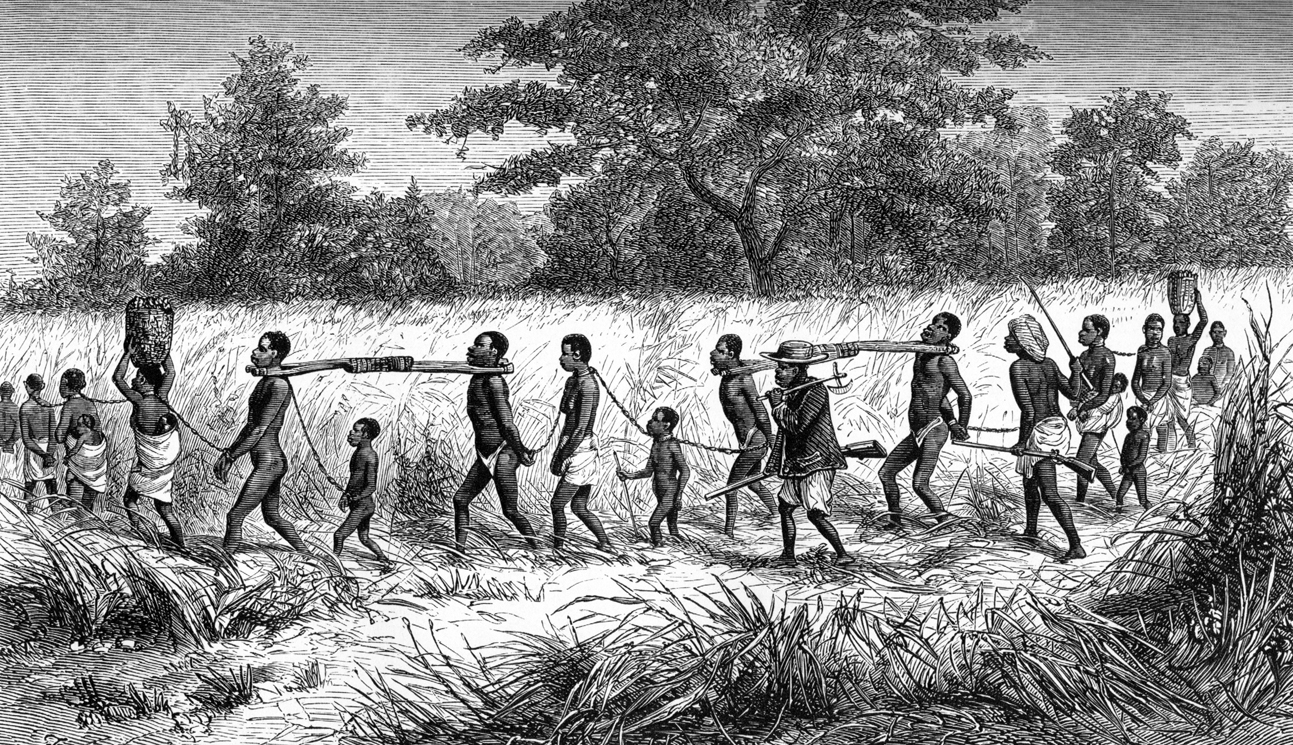
The Mind Of Wakoli khwa Mukisu- Gifted Strategist, Mobilizer, Visionary and Master Of Garb
In all this chaos of transition, Wakoli khwa Mukisu’s strategic genius saw opportunity. As we saw in the part 1A of this series on the battle of Lumboka I, Wakoli organised for ways to arm BaBukusu. He tricked mercenaries with food and women in exchange for guns; competed in the ‘open market’ for guns from deserting mercenaries; and organised for raids on troops passing through Bukusu land. Most importantly, he led efforts to design and build the fort of Lumboka.
Possibly, of even more significance Wakoli recruited and trained an army drawn from a tapestry of Bukusu clans. One account of the war estimates the number of Bukusu warriors at Lumboka fort in the thousands. In those times, such a huge force could only have been drawn from the breadth and width of Bukusu land. To keep them motivated Wakoli employed all manner of tricks.
This included propaganda – speaking and condemning the collaborating rulers of the Wanga and Bukhayo. It also included liberal use of bhang. Moreover the prophesy of Mutonyi wa Nabukelembe that BaBukusu would clash with an invading force – who would have forced them into despicable acts such as Bukusu sons cooking for them – still rang fresh in the minds of Babukusu.
It is said that his initiation in adulthood under the Basawa Sikalala age set gave new focus to the hot blood coursing within Wakoli. After transition into adulthood, Wakoli stopped being the Casanova and became a fearless visionary leader. That morning of 1894/5 facing the one nostril-ed monster, the future of his people, the tomorrow of the generation nee from his loins and other men of similar stock, must have flashed before shujaa Wakoli khwa Mkisu’s eyes. This was his mission. His life. His responsibility to his people.
The Death Of Namisi
With the blood of warriors rushing through him, he then did what any man his caliber would have done. This is to say, Wakoli went for the biggest of them all. Specifically, he narrowed on the head of the monster before him. Fatally, he went for Namisi. When he struck with his gun, meeting fire with fire, Namisi the lesser warrior and lesser man guilty of being the agent of an invading force, fell.
The bullet went through his thigh bone. There is no mention of this, but Wakoli might have pumped more gun powder into Namisi to finish him off. What is said, however, is that once done with Namisi, Wakoli blasted away Okwara wa Tindi’s ankle. Thus the Bukusu war song
Okhwa Mukisu khamupa engeche Okwara wa Tindi
Going by accounts of the Battle of Mukhweya, Namisi must have fallen first. As, devoid of their leader, what followed was proper annihilation of the aggressor.
Now, keep with me as this is where it gets confusing. Some accounts have it that Namisi died in the battle of Lumboka. These accounts downplay the expedition by British agents to recover by way of force guns from the Bukusu. Other accounts play out the disarmament incursion to the full. It is from these accounts that we know of the role of Mukhweya in the Bukusu resistance. However, in some recollections of oral literature, Mukhweya features as the area where Wakoli first fled to following the fall of Chetambe fort.
They Mystery Of The Enemy Solider(s) Who Managed To Escape
Whichever the version of the story, all accounts talk of battle in which the Bukusu won and an enemy soilder was spared or escaped. In one of these accounts, of the two hundred imperialists, only two Bawanga escaped. I like to think that they were spared so as to go and tell their master of the might of the Bukusu.
To be precise, the lives of the two Bawanga may have been intentionally spared. Given what we have learned of Wakoli khwa Mukisu so far, such a tactic is well within his domain. He could have left them to escape so that they could be vessels of fear in the enemy’s camp. Imagine the fright when and as they retold the story of their escape to their commanders and peers.
The military genius of Wakoli considered, the account that talks of twenty five/ thirty Sudanese soldiers as being sent to disarm BaBukusu has it that one of them escaped. Or had his life spared. All said, with this resounding victory, the Bukusu gained another two hundred (or 25 to 30) guns from the vanquished invading force. But the Bukusu were not without casualty. Some oral accounts of the battle of Mukhweya have casualties on the Bukusu side as being only three.
In honor of the three and others, allow us to indoctrinate these fallen soldiers into the shujaas of Chetambe hall of fame. They are:
- Wafula, son of Opata who was Omulunda by clan
- An unidentified Teso man who fought alongside the heroes of Mukhweya and Chetambe
- An unidentified warrior who from our research it’s still unknown if he was Bukusu, Teso or any other tribe.
A SECRET PLAN: HOW IN THE AFTERMATH OF DEFEAT, THE COLONIALISTS MOBILIZED FOR THE SECOND FOR WAR
Surprisingly, it went quiet for a while – possibly a months to a year tops. Our brothers the Bukusu went about their lives with Wakoli in charge of the fort.
But unknown to the Bukusu, Mr. Spire in the bowels of a resounding defeat sent out an SOS. The SOS saw the arrival, from Kisumu, of C. H. Hobely whose name the Bukusu pronounced as Opilo. In came also Mr. William Grant from Busoga Uganda who the Bukusus called Chilande. By this time you must have figured that the Namisi killed by Wakoli khwa Mukisu is possibly also a Bukusu-nised version of a European or other non-native name.
However, all that matters not as the humiliation that the British suffered under Wakoli and company saw the empire mobilize its resources. Alongside Grant, armed Baganda 1000 strong were mobilized from Ugandan chief Kakunguru. Another couple of hundred warriors from the Uasin Gishu Maasai (Kalenjin) joined the party.
King Nabongo Mumia himself donated a column of spearmen. In terms of leadership support, the new Commissioner of Uganda, Mr Ernest Berkley temporarily changed his duty station to Mumias. Further, he brought along friends well versed in battle. Notably a Captain Sirwell of the Dublin fusiliers.
Say what you like, but given the context, what followed in the aftermath of this scale of military mobilization – battle of Lumboka and the war of Chetambe – are in my eyes the first, first world war. In all fairness, it was the world against the Bukusu. If you don’t believe me, the scale of atrocities starting with the next account of the second battle of Lumboka should convince you otherwise.
Dislaimer
This account is likely to differ from the many other accounts of the events of interest. There might even be deviations in the description of characters and times. The challenge faced by the 19th century East African historian of a lack of proper records in one not easy to navigate. Moreover, as stated at the introductory piece to this series, one of our aims is to make this effort of remembrance of our heroes as digestible to the reader as can be. To this end, we often opt for convergence in accounts of the events as a key measure of validity. Moreover, we also frequently elect to highlight nuances from different accounts. As stated, our primary sources will be listed at the end of the series for your further reading.