
Chiswa chikhupaka are a much loved Luhya delicacy. A story from my childhood on the joys, work, art and craft of harvesting termites for food.
The village where I was born has its dry season very late November, throughout December and a large part of January. Often in November and December, schools were closed. Those with relatives in the big cities left for the city lights immediately schools closed. We used to say that they had gone to ‘eat that of the town’. For those of us with nowhere to go, we found ways of enjoying village life. We ‘eat the fat of the village’ so to say. Harvesting termites topped the list of ways we enjoyed the richness of the land of our ancestors
Preparation for the harvest
We began by identifying possible spots to harvest termites. Termites harvested at this time, and in the way I’m about to describe are are fondly known as chiswa chikhupaka. Chiswa Chikhupaka simply means termites that are beaten. As the name indicates, these termites made us work hard. So hard that we’d joke that harvesting chiswa made us build biceps and triceps.
On days that we planned to harvest these termites its morning, subuyi, was spent identifying sites with anthills. In Lubukusu, anthills colonized by termites are known as siswa. Once we identified promising siswa, we would clear the bushes around these anthills. Experts like my cousin Nabilabi would then look out for kameso and water them sparingly.
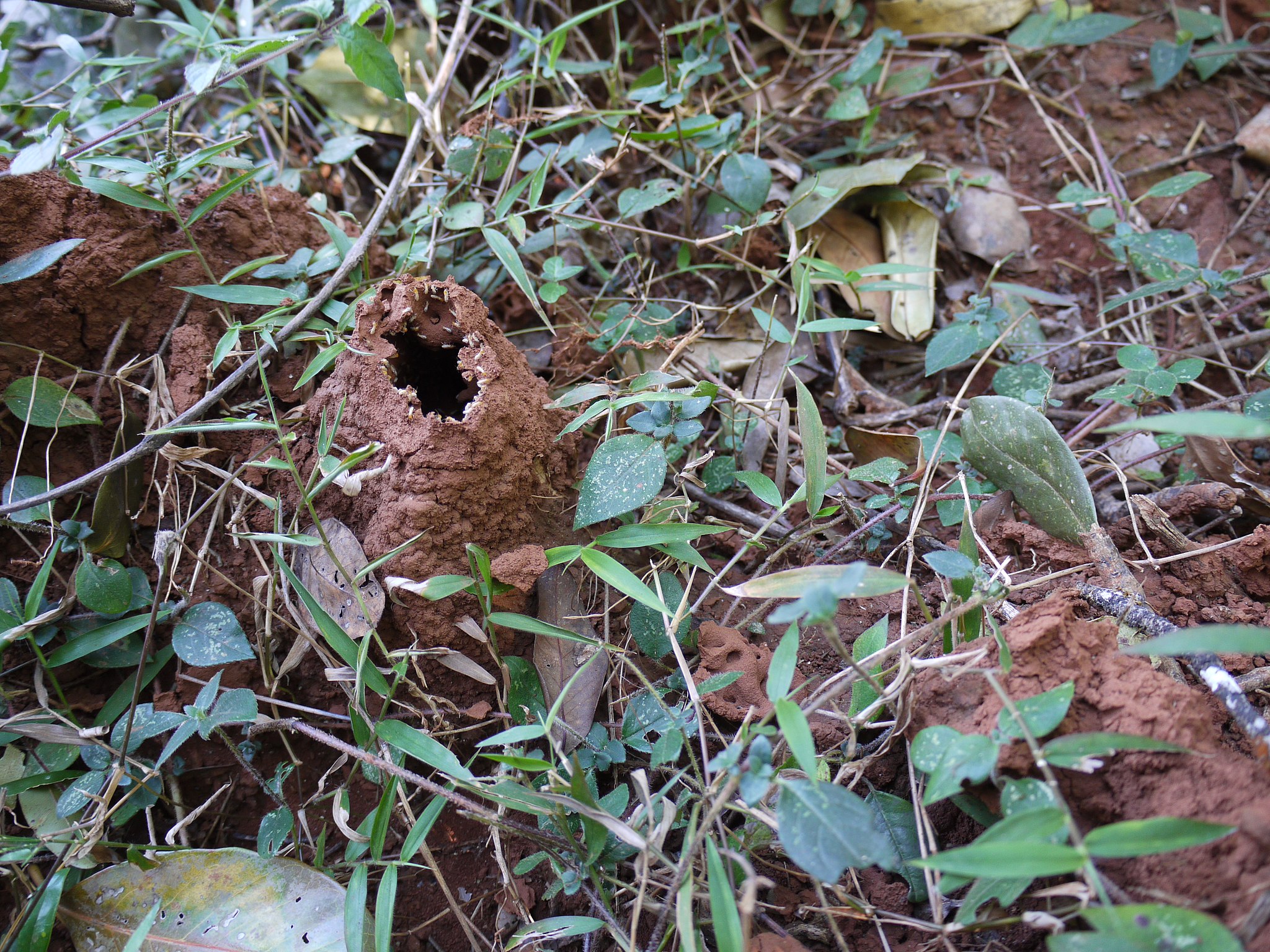
The water was meant to soften soils around kameso simulating rain and attracting kamake (worker termites that we harvested) to the surface. It was also thought it made the work of termites moving easier. As the water sipped into the earth, we brought posts (kimianjo) and laid them around siswa.
How to harvest termites of the dry season: chiswa chikhupaka
Then we’d gather posts of smaller girth to those laid on the ground. These posts were cut short enough to easier handling as we used them to hit posts on the ground. The smaller pieces of posts, also known as kimianjo, ranged in size from a rake handle to standard kitchen rolling pins. We then hit kimianjo briefly before leaving to assemble the other tools of trade. This was a brief session that lasted 20 mins max. The action of hitting kimianjo early in the day was ‘a way of greeting the termites’.
The other tools of trade comprised of water, a bucket with a lid and lots of clay soil collected from the river bank. We also brought fresh banana leaves.
Khukhupaka
We begun by ‘calling’ chiswa chikhupaka. To achieve that, we divided duties among ourselves. The young and useless lads like yours truly would be placed strategically around siswa to hit kimianjo. This hitting of sticks (together with the wetting of kameso) was meant to trick termites that it was raining.
In effect, our hitting of sticks and wetting of the termite holes simulated conditions in nature that make termites to move. The website Entomology at University of Kentucky states:
In nature, termites swarm to disperse and start new colonies. Triggered by warmer temperatures and rainfall, the winged termites emerge from the colony and fly into the air. The swarmers then drop to the ground, shed their wings, pair off with a mate, and attempt to begin new colonies in the soil.
Possibly to kill the boredom of a monotonous task, we composed songs and sang them so as to ‘call’ the termites. As we rapped on the posts on the ground, we sung songs in praise of the termites. One such song would go like;
Enje yaola misiko sokwa makalama…. The day is now calm Misiko please fall upside down.
This hitting of kimianjo is referred to as khukhupaka translated as hitting.
Making the termite trap
All this while experts like Nabilabi would be making tall tubular structures around kameso using the clay soil from the river. First, Nabilabi would mold a tube to cover the entire opening of the kameso. This structure simulated the architecture of tall termite hills as they appear in nature. Then she would then mold with clay a separate container like structure to receive the termites. If you saw siswa sikhupaka, you would think we were molding kettles/tea pots for play; but this was serious business.
Second, Nabilabi using wet clay as glue would make a furrow like structure that connected the tall tubular structure and the container. One end of this furrow like structure would be fixed to the tall tube. The other end will be positioned at the mouth of the molded container for receiving the yield. This end would also be lined with a piece of fresh banana leaf to make it slippery so that the termites fall into the container effortlessly.
Finally, the open end of the connecting furrow would be partially covered with a clay roof, leaving a small opening. This opening let in light thus completing our simulation of the termite hill. Nabilabi used to say that the a small opening provided light that attracted the termites. Using her hand or a piece of clay, she would intermittently cover and open this hole to control the flow of termites up our tube.
The art of the harvest
If they came too fast, she would extend the opening and allow some termites to escape. These ones we trapped with our hands and devoured some there and then.
This is not to say that the rapping on kimianjo stopped. It only stopped when Nabilabi who was on standby harvesting our yield indicated that we had enough for the day. At the end of the day she would alert us that we would be retiring soon.
Chiswa chikhupaka: Our food and kindred spirit
The tune of hitting kimianjo would then change. It would be slow and less aggressive. This was meant to simulate subsiding rain. As we closed the day, we would sing songs like:
Ngolia Khwalota x2…. Ngolia we are retiring…
All in all, we remembered to thank the anthill for giving us a good yield that day.
Back home, our clothes would be covered with mud, our bums not so clean from sitting on the ground hitting kimianjo. I don’t remember taking a shower after such long days. I was so would be worn out! We would be happy to just have our dinner of fried salted termites with ugali and sleep. That was pure bliss!!