
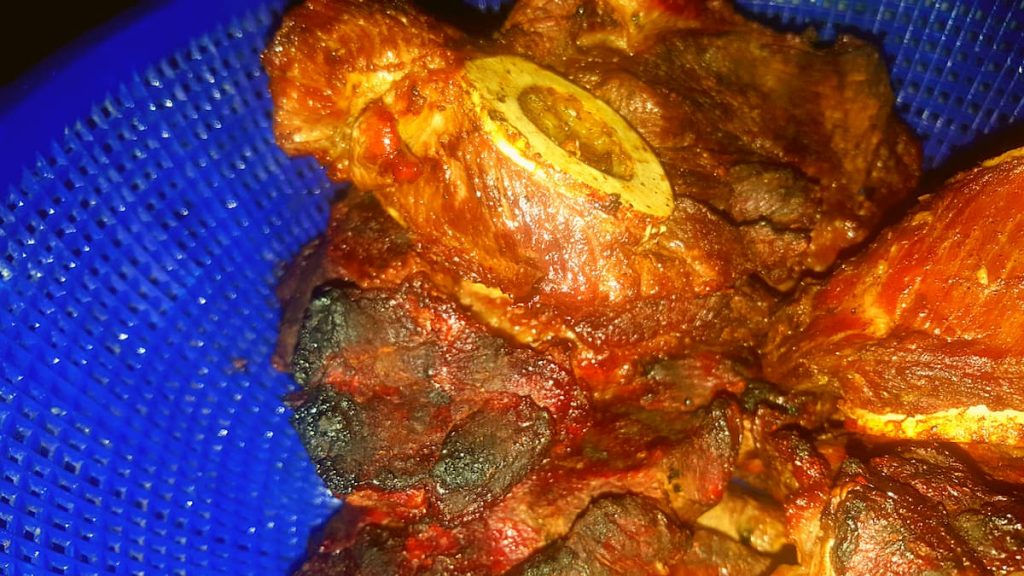
Delicious aged beef the Luhya way video and recipe

How to make aged beef the Luhya way video and recipe. The aged beef a type of the Luhya delicacy enyama esike, is a special meal reserved for special guests. When served, acknowledge your host’s reverence of being honored by your presence. Because, basically they are sharing with you the very best of their granary.

Enyama esike is a Luhya delicacy that begins by using gentle heat to seal beef or lamb, and then ageing the meat over a few days to perfection. While enyama esike is similar to aliya found among the Luo, there are subtle differences. With aliya the smoke or sun drying does most of the work; but with enyama esike, done right, ageing the sealed meat in a natural cool environment is where the delightful taste is at.

Often, the ageing is done by placing the sealed meat in an old pot holding ash for making munyu musherekha. One thing about the sealing. I use the term loosely as the meat is prepared in chunks. This means that the meat does not cook through as chunks will take a while before it cooks through. Compare with alia where the beef/lamb is cut down into strips.

Video: Aged beef the Luhya way

[embedyt] https://www.youtube.com/watch?v=BL5SRrzNEO4[/embedyt]

Simple Enyama Esike Recipe

Enyama esike is a traditional Luhya meat dish that relies on smoking, heat and time to age meat. This simple recipe is fit for the modern kitchen that doesn't have a smoker or traditional three stone, firewood fireplace for cooking.
Prep Time 10 minutes
Cook Time 30 minutes
Total Time 1 hour 28 minutes
Course Main Dish
Cuisine African Cuisine, East African Cuisine, Luhya Cuisine
Servings 1 Serves 4 people

Ingredients
  

  • 1 Kgs beef or mutton on bone Well marbled meat preferred.
  • 1-2 Cups Munyu Musherekha Quantity depends on strength of lye.
  • 1 Liter Water Could be more depending on how well aged the meat is.

Ingridients To Saute The Enyama Esike and add a Contemporary Twist

  • 1 Large Red Onion
  • 3 Large Tomatoes
  • 1 Bunch corriander
  • 2 Large Chillies Depends on how hot you like it.

Instructions
 

Preparing, Roasting and Aging The Meat

  • Clean the meat thoroughly to rid it of bones and foreign matter if any. Leave as much of the fat on. However strip of any tendons or unnecessary connective tissue.
  • Do not cut up the meat into small pieces. It should remain a chunk as much as possible. Personally, I only cut through with a knife at points to aid with salting.
  • Salt liberally.
  • On an open charcoal stove, roast the meat. The fire should not be high. You can sprinkle some water on top of the burning coal to kill off the heat. Alternatively, sprinkle some of the ash on the burning coal to temper the heat.
  • Keep turning periodically sprinkling water along the way. When the fat drops into the fire and causes a flame, put it off with some water. The intention is not to cook the meat through. What we want is to make a nice golden to dark crust while imparting a smokey flavor.
  • Once satisfied with the crust or when the heat is too high, set the beef aside on the jiko near the heat, but not directly above it. See the image for illustration. At that position, the beef continues to dry up losing some of its juices.
  • Keep turning the meat periodically so that it is evenly done.
  • Set aside on a rack to cool.
  • Once cool, keep the beef on the rack in a cool dry place for a minimum 2 days.

Cooking Enyama Esike, The Traditional Luhya Way

  • Cut up the aged beef into bite size chunks.
  • In a pot, add the beef then water to cover it.
  • Let it simmer.
  • Once it starts to come to a boil, add your Omunyu mushereka.
  • Cover, reduce heat and let it slow cook. Keep adding water as needed.
  • The enyama esike is done once the soup turns thick, creamy in color and the beef is soft.

Optional Contemporary twist

  • Chop up a few stems of spring onions. Use as garnish.
  • Serve hot with obusuma accompanied by your favorite traditional vegetable.

Notes

It's okay to cook the meat once done with the roasting. However, best results are when the enyama esike is left to age. Time not only softens the meat, but also imparts a flavor that you wouldn't want to miss out on.
Keyword Simple, Traditional

Leave a Comment