
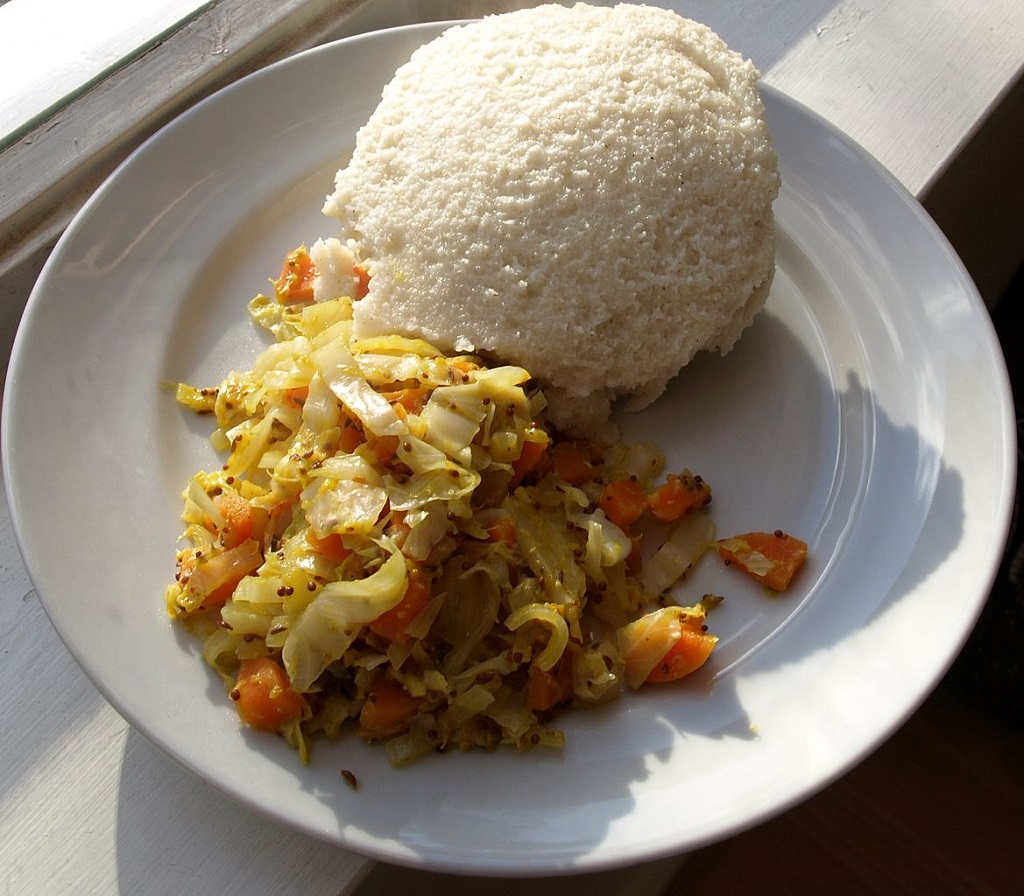
You read that right, here the rules to serving ugali the Luhya way sans careless cultural faux pas. Oh, yes! There are rules to serving ugali, the Luhya way. Khukabula busuma and all the secrets to hosting a Luhya in a way that will make them feel not just completely honored, but at home too.
Early this year, before coronavirus denied us integral bits of our culture such as the revitalizing therapy of dropping by ingo now and then, I went visiting my mother back in the village. As always, I took my children along so that they can have a taste of their roots.
Omusakhulu gets special treatment
You know, my son is a free spirit who takes advantage of all opportunities he gets to interact with nature. He will for example begin running around my mother’s compound after alighting from the car; instead of getting into the house for the longform prayers that our mother’s are known for, and thereafter longer greetings as is customary.
He wails and cries inconsolably whenever attempts are made to bring him into the house. Having been named after my father, my mother dissuades all attempts at reign on him saying: “Omusakhulu amefika kwake, wacha ainspect boma.”
The other thing omusakhulu must have now that he is home, is engoko. One to enjoy, another to go and rear, and if my husband hasn’t accompanied us -another to take home to him to enjoy. A privilege my husband enjoys as he did the honorable thing by our marriage customs; from the introductory letter to fruitful enganana discussions.
That visit, my mother’s house help was on her monthly off meaning I was to take over all her responsibilities. After greetings, prayers and pleasantries, my mother asked me to slaughter the engoho for my family before my husband headed back. As you may know, in Luhya culture, mashemeji like my husband aren’t to be about their in-laws when the sun set.
With time squeezed, I must admit I did a wonderful job working on that itaywa, as a true Luhya should eat a chicken. Mum was impressed with the woman I had turned out to be….. until we got to making ugali. My red tape mother, her of the lukhendu fame, does things in a certain way. So ingrained is this regimen that she follows from 1920 to date.
Obusuma by my mother’s standards
For example, she doesn’t just guesstimate the amount of water to use for making ugali. She has a specific jug for this job. Then there is a specific sufuria to cook the ugali in. You cannot just make ugali using the tea pan. ORDER! Everything must always be at its place always!
The rules must be followed lest a woman of lukhaye like herself embarrasses herself with less than perfect obusuma. Having grown up under her roof as her primary helper in the kitchen, I breezed by these rules with not much ado. It is in the next steps that the bad habits of ‘town’ caught up with me. I had forgotten how to serve ugali the Luhya way.
Rule 1: How to serve ugali the Luhya way – khukabula busuma
After making ugali, as I prepared to get the obusuma from the fire, she handed me four plates. That’s when I blundered, asking her what all those plates were for. Maiyooo!
Let’s just say she went into a Lubukusu rap whose words were half in self pity at failing to teach her daughter well, half in shock and wonder at the kind of life ‘we lived in town’.
Taking over the task, she served the busuma in different plates (khukabula busuma).
Khukabula busuma considerations: Learn from how we did it in order to serve ugali the Luhya way
The first plate was for my father and husband to share. This plate was the best of the lot, fit for the kings of the homestead. And the amount of ugali on the plate? Well, my father is a poor eater. My husband on the other hand feeds like a true omundu strong.
But even three of him and ten of my father couldn’t take down such a mountain of ugali in one sitting. The other omusakhulu in the home, my omusinde, was free to join that table if he wished. As if his tiny appetite could occasion any damage to the obusuma.
In the second plate, she had a serving of obusuma for the very young children. Mum and I had our share included on this plate.
She then served a separate plate for the teenage boys and adult males who had come to help her clean the compound. This was also a mountain of obusuma to behold; for their hard work gave them that appetite that makes a Bukusu man christen ugali – liposo – meaning in those moments he can take down a gorogoro of busuma.
Finally, she served the last plate for women and girls that were working on the farm that morning. To this portion, extra was added in the event that any of them had towed a child along.
You might be struggling to understand why all these plates. Why not just serve two plates? One for the workers, the other the family?
Understanding the why in the strict rules of khukabula busuma
The primary reason explained mum, was that according to the strict rules of Bukusu culture governing the interaction between mothers in law and sons in law, she couldn’t eat from the same plate of ugali my husband.
Even if there are left overs, she had to be keen enough to ensure she doesn’t eat it. This tradition barred her even from reusing the left over ugali through khukinura. She was to ensure the ugali is given to someone else because of the respect she has for her son in law. The is also true for daughters in law with their fathers in law. The village has shown me words.
The secondary reason, that in the olden days was the primary reason, had to do with the dynamics of the polygamous setting common then. First, the men often fed by themselves separate from the commune. Thus it made sense to khakabula his plate of obusuma separately. Moreover, how well the patriarch in such a setting took down a plate of ugali was a surrogate indicator of the favor he had with the wife who cooked it.
Contemporary and modern intrigues surrounding khukabula busuma
Fast forward to the times of our fathers. The primary reason to khukabula busuma was that the men often would be late coming home. So a good wife set obusuma for her omwami aside. Your omwami shouldn’t come home to his kingdom and feed off scraps and leftovers like a dog. Girl, if you are not going to fix him a hot plate when he gets home, at least have the decency to not make his food look like an after thought.
More importantly, she kept it warm (khubikha busuma esibero). In addition, just like their mothers before them our mothers took how well our fathers ate their ugali as a surrogate marker. Though this time it was to know whether his working late, or attending kikao cha wazee was not a cover of for him enjoying the sweetness of another woman – food and all.
Rule 2: The other secrets begin with the order in which you serve your guests
There are three dimensions to this. First is the order in which you wash you guests hands; then there is the matter of how the food arrives at the table; also, one should consider what was being served and do the right thing accordingly.
As with the food, the plates and washing of the hands before eating, the patriarch in the seating is served first. If there are two patriarchs present as it can happen with in laws visiting, you start with the guests then the hosts and work yourself down.
The art of catering to your guests the Luhya way
The food should arrive on the table as the guests wash their hands. But each activity should not get in the way of each other. The grace should be timed in a way that it doesn’t delay the start of the feast. Remember, a true Luhya eats their food hot and thus synchrony is important so as to not let the food get cold as people was hands, the table is set eMUL.t.c
Moreover, having washed the hands of the basakhulu first, it be seamless from them finishing washing their hands and diving in. Keep in mind that you wash their hands where they sit. For that you’ll need a jug of warm water, soap and a receptacle to collect the waste water. You should also provide something to dry their hands. In Luhya culture, it’s an abomination to have your guests sitting there as lame ducks; salivating for food with their hands held up in the pose of a diva who has just made her nails.
I know you are thinking about it, so I’m going to say it on your behalf. Being the perfect host to an omundu strong, for that matter a Luhya in touch with their roots, is in many ways like the beautiful chaos of the pit stop of a formula one race. If you think I’m exaggerating, just know I’ve saved for latter the intricacies of serving a Luhya delicacy of special status such as engoko. Not wanting to bombard you, let’s have this sink in first. Soon, I’ll be tackling the rules of serving chicken the Luhya way.
For now, good luck my sister. Trust me, you’ll need it.
VIDEO FROM MULEMBE FOOD
[embedyt] https://www.youtube.com/watch?v=j3SpZH59zME[/embedyt]