
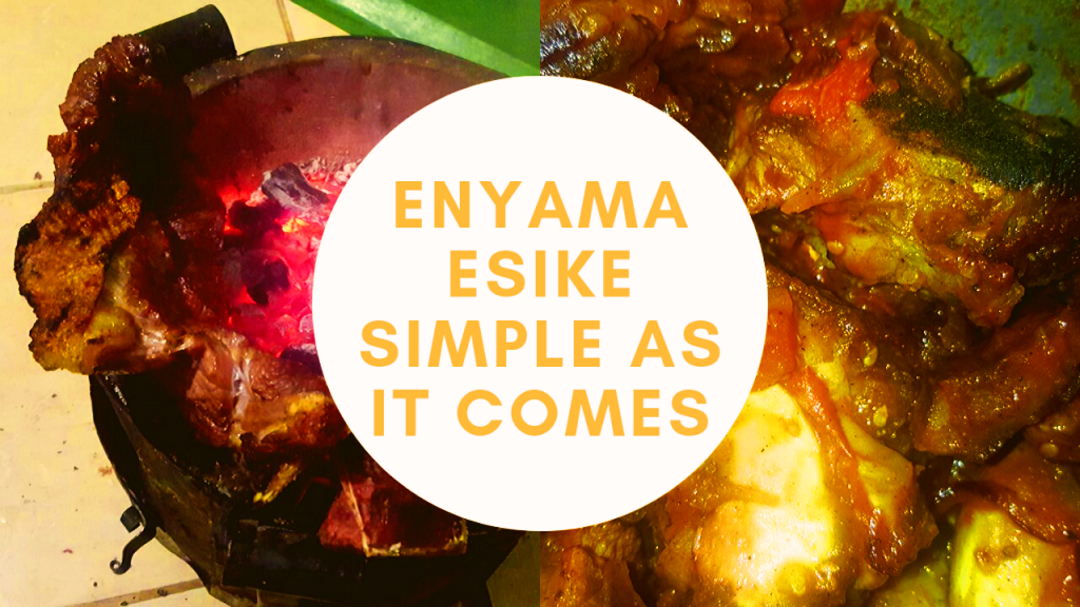
Enyama esike is a traditional Luhya meat dish that uses smoke, gentle heat and time to age meat. The Luhya are a Bantu tribe found largely in Western Kenya, with small communities in Central Uganda and Northern Tanzania. They are re-known for their rich culture that includes a cuisine to delight in. This enyama esike recipe is an easy fix fit for the modern kitchen that doesn’t have a smoker or traditional three stone firewood fireplace for cooking (mahiga). Among the Luo, the Nilotic neighbors of the Luhya, enyama esike is known as athola.
Being Luhya is great. The food, which every Kenyan standup joke says we absolutely love, is partly responsible for our pride in being people of mulembe. While nothing beats having a kienyeji chicken chased down and slaughtered (just for you) when visiting loved ones, being served enyama esike speaks a different welcome.
This is because preparing this traditional Luhya meat delicacy requires skill and patience to prepare. Thus a bowl full of steaming enyama esike with obusuma and accompanied by your favorite traditional vegetable – be it miroo, kunde, chisaga or seveve – says: We have been expecting you; and all that while we have been thinking of how to make you feel at home.
THE TRADITIONAL LONG METHOD TO ENYAMA ESIKE
Traditionally, enyama esike would be prepared over days. The meat would be wrapped on a stick and placed close to the family cooking place. Specifically, it was situated at a distance where it was within the vicinity of the heat. I like to call this method the Luhya Sharawama. Then, the beef or mutton is slowly turned, being let to take in the smoke. Over the days, the juices would drip off. What would be left behind was a compact and dry chunk of meat.
The method of preserving meat with heat and smoke is similar to the one we described when making kivambara. This is because meat cured this way by a skilled hand could remain good for months.
Simple Enyama Esike Recipe
Enyama esike is a traditional Luhya meat dish that relies on smoking, heat and time to age meat. This simple recipe is fit for the modern kitchen that doesn’t have a smoker or traditional three stone, firewood fireplace for cooking.
- 1 Kgs beef or mutton on bone (Well marbled meat preferred. )
- 1-2 Cups Munyu Musherekha (Quantity depends on strength of lye. )
- 1 Liter Water (Could be more depending on how well aged the meat is.)
Ingridients To Saute The Enyama Esike and add a Contemporary Twist
- 1 Large Red Onion
- 3 Large Tomatoes
- 1 Bunch corriander
- 2 Large Chillies (Depends on how hot you like it.)
Preparing, Roasting and Aging The Meat
- Clean the meat thoroughly to rid it of bones and foreign matter if any. Leave as much of the fat on. However strip of any tendons or unnecessary connective tissue.
- Do not cut up the meat into small pieces. It should remain a chunk as much as possible. Personally, I only cut through with a knife at points to aid with salting.
- Salt liberally.
- On an open charcoal stove, roast the meat. The fire should not be high. You can sprinkle some water on top of the burning coal to kill off the heat. Alternatively, sprinkle some of the ash on the burning coal to temper the heat.
- Keep turning periodically sprinkling water along the way. When the fat drops into the fire and causes a flame, put it off with some water. The intention is not to cook the meat through. What we want is to make a nice golden to dark crust while imparting a smokey flavor.
- Once satisfied with the crust or when the heat is too high, set the beef aside on the jiko near the heat, but not directly above it. See the image for illustration. At that position, the beef continues to dry up losing some of its juices.
- Keep turning the meat periodically so that it is evenly done.
- Set aside on a rack to cool.
- Once cool, keep the beef on the rack in a cool dry place for a minimum 2 days.
Cooking Enyama Esike, The Traditional Luhya Way
- Cut up the aged beef into bite size chunks.
- In a pot, add the beef then water to cover it.
- Let it simmer.
- Once it starts to come to a boil, add your Omunyu mushereka.
- Cover, reduce heat and let it slow cook. Keep adding water as needed.
- The enyama esike is done once the soup turns thick, creamy in color and the beef is soft.
Optional Contemporary twist
- Chop up a few stems of spring onions. Use as garnish.
- Serve hot with obusuma accompanied by your favorite traditional vegetable.
It’s okay to cook the meat once done with the roasting. However, best results are when the enyama esike is left to age. Time not only softens the meat, but also imparts a flavor that you wouldn’t want to miss out on.