
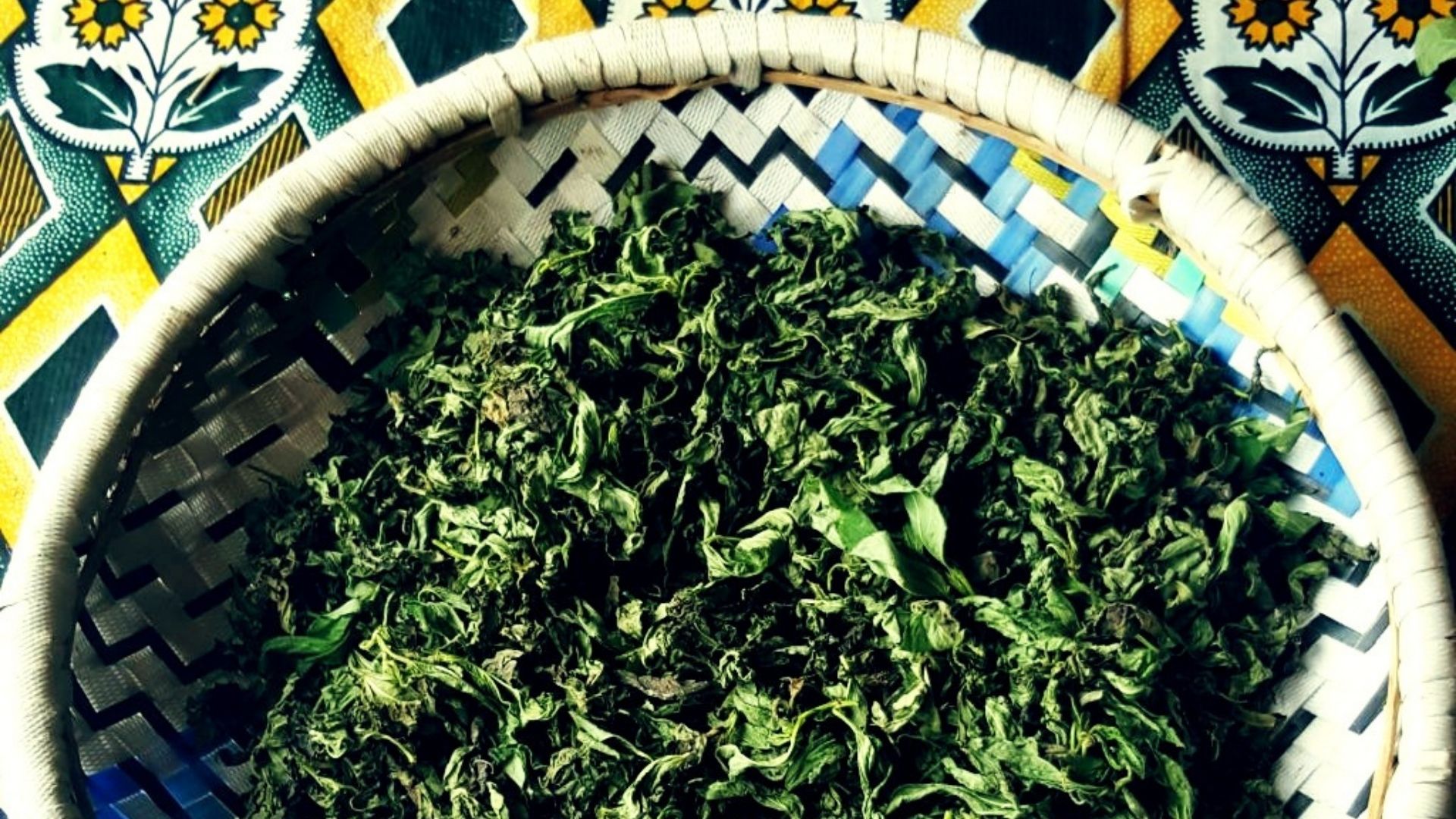
In Shona language of South Africa, munyu is salt. Among the Luhya of western Kenya, munyu or munyu musherekha is a traditional lye/salt made from burning and then leeching the ash of certain dry plant matter. Likhubi in Luhya (scientific name Vigna unguiculataa; common name cowpea in English and kunde in Swahili) is a traditional vegetable enjoyed across Africa. Follow our recipe to enjoy the perfect kunde with munyu musherekha and simsim butter or cream recipe.
Serve kunde with munyu musherekha accompanied with
- Obusuma (ugali) of your choice – be it white (main ingredient maize flour) or brown (main ingredient sorghum or millet).
- Rice
- Chapati
How to make (likhubi) kunde cooked with munyu mushelekha
This recipe on how to make (likhubi) kunde cooked with munyu musherekha is a simple yet authentic take from my Masaba grandma's kitchen.
- Sufuria
- Chopping board
- Knife
- Kitchen strainer
- Wooden cooking stick
- 10 Handfuls Kunde leaves
- 1/4 cup Munyu musherekha
-
The leaves are plucked from the stems then washed in clean water as many time as needed to remove all dirt
-
Put the plucked leaves on the kitchen strainer to drain off excess water
-
Add about three quarters of a cup of cooking water and add quarter cup of musherekha are added into the sufuria and placed on fire to boil for 5 minutes
-
The vegetables are added in the sufuria and covered with a lid and left to cook for 7-15 min. Stir the vegetable with a wooden cooking spoon when it starts to boil. Stirring ensures that the vegetable cooks uniformly and does not burn at the bottom.
-
Add cream or milk, or groundnut or simsim butter (sifuluko) and salt to taste
-
Simmer for 5 minutes and serve
Modern contemporary twist to kunde cooked with musherekha
-
Once boiled, fry the leaves with with onions, tomatoes and garlic if you wish.
-
Add cream or milk, or groundnut or simsim paste (sifuluko) and salt to taste
- How long the kunde cooks and simmers depends on the age of the leaves. younger leaves are tender and cook faster.
- For tougher older kunde leaves, a rough chop of the vegetables before cooking gives better texture to your dish.
- Always know the strength of your munyu musherekha when cooking to avoid adding too much or under utilizing it. For more on how to make and use munyu, read our blogs