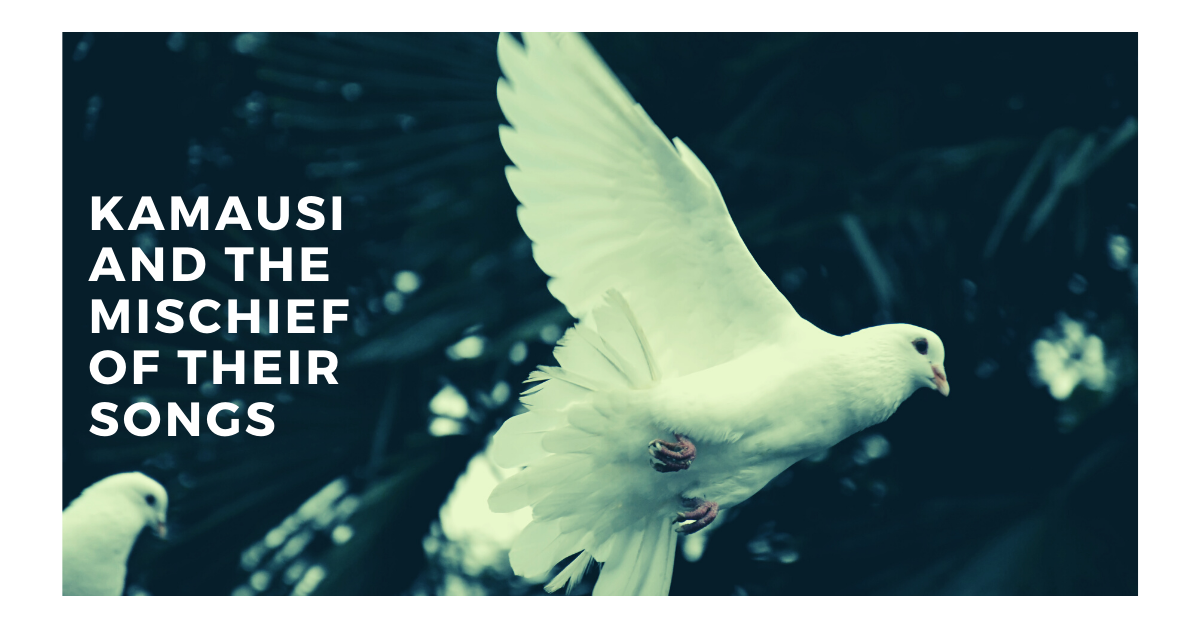
The Bukusu love doves. We love the dove’s gentle demeanor and calm spirit, attributes which are universally accepted as the bird’s embodiment of mulembe. Further, doves are not only edible birds, but their meat is indeed very tasty. In Lubukusu, the dove is known as kamausi. There are domestic and wild doves. Today our attention is drawn to the wild doves and the cryptic messages they pass through their coos and songs.
follow us
Dove meat is at the heart of many of my childhood memories. Unlike engokho which mum kept a tight count of her stock, doves were considered ‘ kids stuff’ and thus, I could literally liberally roast and eat them without being asked questions. This ‘freedom’ of doing as I pleased with the doves was quite the thing. Those of us who grew up Luhya know that all food in the family basket was in the domain of mum. However when it came to hunted birds, termites, locusts and other wild meats, she didn’t interfere. And that level of freedom was everything.
Kamausi nest
It is this freedom that led me to discover a dove’s nest. We used to pass by a bush on our way to the river. Every other time we passed by a certain particularly bushy spot, we’d startle a dove, occasioning it to fly away. One day, in a bid to quench the spirit of discovery within, I got curious and decided to look around the bush for its nest.
True to my suspicion, I found a beautiful nest resting on a branch. In it, were two lovely eggs. The Bukusu refer to the nest as siswi. The eggs on the other hand are known as kamaki. The eggs were mostly white in color with brown spots sparingly sprinkled on them. They are appealing to the eye.
Growing up Luhya
I have written here many tales on growing up Luhya. A dime a dozen they might be, but every time I write a story like this one, another anecdote of growing up Luhya in the village pops up. This time, I am reminded of that spot where I found the dove nest. Growing up, the land around my village was quite bushy. The adults would always warn us of forays into the bushes. In fact, wandering aimlessly into the bush was enough to earn one a spanking. Unless of course one was fetching firewood, which gave us the freedom to hunt for doves.
So bushy it was that foot paths to and from the village would often allow strictly one person at a time. Let me tell you how hard it was when you saw someone coming in your direction with a load on their head.
As the child, it was expected of you to look for the next opening in the thicket to slip into and allow the other party to pass. Woe unto you if both of you had loads. For peers, the one with the lighter load had to put down their load and give way the one with the heavy one pass.
Passing through the thickets, one would hear birds. My favorite songs were the sound made by various doves as they coo. Often, the doves would emerge from the bush and come visiting. They would come bearing messages in their songs. Nobody knew exactly what the doves were communicating, but we found out own way of interpreting those dove sounds in these interesting ways.
The kamausi coo that encouraged mischeif: Mwichukhulu wa kasawa, mbulungulile ngakule
This dove was taken to be human. S/he was talking to the grandchild of Kasawa, telling the grandchild to shell maize and sell to it. Quite a naughty thing to do as selling your grand parents maize was a punishable offense of the first order. Besides, worse it was that the grandchild were to earn money from their mischief; whilst it was the norm that children had no business handling money. Growing up, this dove coo was the commonest. I urge you to listen to the sound of how doves coos and you will realize that you have heard the song.
The kamausi song titled ‘sit properly’
The dove that cooed this was also assumed to be human. This dove assumed the role of an elderly woman speaking to little girls, say, those below ten. Basically girls who still need to be reminded of etiquette of sitting. Growing up as young girl, our mothers would often chide us about our inability to sit properly. Such that even kamausi had to sing to remind us about sitting properly! Hahaha.
Kuku mbeke situma
This liusi was simply asking anyone within its earshot to cut its comb. For whatever purpose it wanted itself dismembered we don’t know.
Ewefwe engo
Ewefwe engo in Lubukusu simply means ‘our home’. The spirit of mulembe of home as a place of peace was fortified through the song from this dove.
Kamausi that sang the insult ‘Musa kimitwi sita
I grew up with a neighbor named Moses. We simply called him Musa. Now Musa had a difficult childhood. There was a dove whose coo insulted him over and over.
Musa kimitwi sita!
Musa kimitwi sita!
alala kumi na mbili!
alala kumi na mbili!
The kamausi kept telling Musa that he had six anuses. Because it sang the song in stanzas of twos thus, together it made twelve of them.
If Musa heard you hum this song he would beat you to pulp. We rarely hummed this one except when we knew we were many and had given ourselves up for a run for our dear lives. Because Musa could only deal with one person at a time.
Beautiful childhood!