
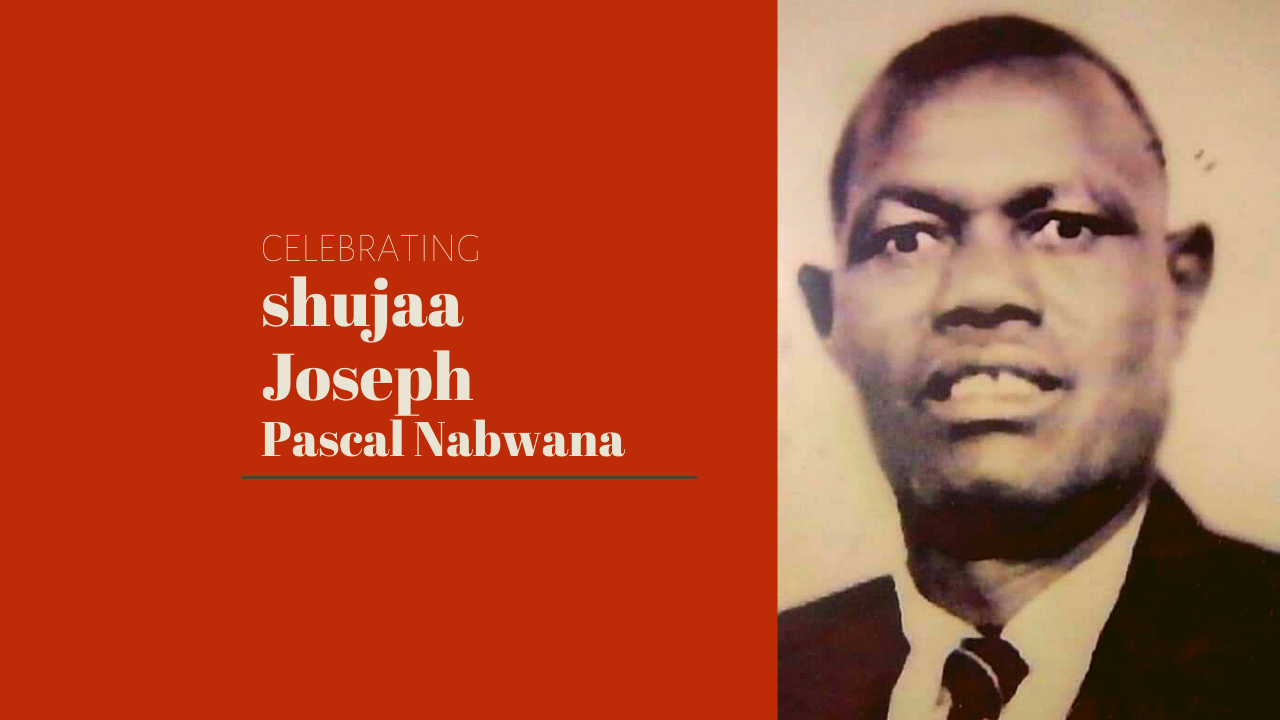
The life and legacy of Mzee Joseph Pascal Nabwana aka Pascari Nabwana, lends truism to the Bukusu saying: Afwile ebikele ne emurwe babana baliyo.
His values were simple: handwork, honesty (for some reason he couldn’t stand lies), persistence and determination. With these noble ideals being his drive, Pascari Nabwana – as he’s more commonly known in the history of Babukusu – was able to bring mulembe upon the land. Mulembe served as a pedestal for the unification in purpose of seemingly irreconcilable peoples, cultures and religions. Living in a period of great turmoil, in passing, this is the legacy of Mzee Joseph Pascal Nabwana; my grandfather.
Omwekesia Joseph Pascal Nabwana rich legacy in education
Kuka successfully helped Roman Catholic Churches and Schools to be built in North Kitosh. This was no mean feat as in the battle for souls and minds, Quaker missionaries were greatly opposed to Catholic invasion of their perceived territory. What was more amazing was the fact that in light of these differences, kuka worked for the unity and cooperation between these two denominations. A number of his grandchildren, including myself, benefited from being educated in schools built by the Quakers. Talk of a legacy!

Being a teacher himself, he had a special place in his heart for teachers. In more than one instance kuka forfeited his salary to pay teachers posted in some of the school\’s he had helped build. He was at loss why teachers earned way less than clerks (the then shop assistants to Indians and mzungus). Even in his sunset years, this paradigm saddened him. Often, he lamented that a teacher would have nothing to fall back upon during retirement; yet teachers held the a most important job in the development of a community.
Mzee Joseph Pascal Nabwana the ambassador, mediator and social justice crusader
What I loved most about him was that he was not afraid of calling out Europeans colonialists for mistreating Africans. He apportioned blame to the cause of the ill treatment towards his people to a misunderstanding between the mzungus and Babukusu. To my knowledge, this misunderstanding had been at the heart of the infamous war of Chetambe of the mid to late 1890’s.
At Lumboka and later Chetambe, the experience of the white settlers fighting Babukusu who had resisted occupation had made the Europeans believe that Bukusus were hard headed and warlike. To cement further the European belief, there was the propaganda against our forebearers.

Part of the propaganda levied against the Bukusu was information cunningly passed onto the Europeans by local collaborators following a deal gone bad. Then there were the Arabs. They too had a tale of a deal gone bad between them and Babukusu. According to my grandfather, the Arabs had sold guns to Bukusus and tried to con them into more payment than had been agreed upon. What truly happened in that deal is today a matter of conjecture.
However, do mind that the Arabs/Swahili had a powerful incentive for their propaganda: the lucrative slave trade that they controlled. Thus, the Swahili/Arabs needed the expansionist European to subdue BaBukusu on their behalf. On the other hand, Bukusus being acutely aware of the fire power of the Europeans, had decided not to breed any new dissent. Until not until the coming of Elijah Masinde (he of the dini ya msambwa fame).
Fragile peace
In this fragile peace threatened by competing interests: European expansionist goals; Arab and local collaborators trade in humans; the church’s battle for souls; Mbukusu’s fight for land and freedom; grandpa believed that with cooperation between the Europeans and locals, peace would prevail.
Under the ambit of mulembe, a lot would be achieved. Besides, God knew that the community needed the peace. To regenerate and restock after the heavy losses to lives and livelihoods suffered in the Chetambe war.
Omwami Pascari Nabwana community mobilizer par excellence
Lastly, kuka Joseph Pascal Nabwana built schools and churches not with his own money but by appealing to the common sense of the would be beneficiaries to unite, donate money, lay bricks and build the school’s themselves. Through this brand of community initiative fronted by Pascari Nabwana, we have built schools, churches and amenities their like sisakati; way after his demise.
I leave you with one story that exemplifies the character of the man. A mien that earned him the respect of other men. Chief Amtallah the original father of modern day Kimilili area welcomed my grandfather to settle in Kimilili and Maeni areas. This was despite his engobi (placenta) being buried in Siboti the navel of his people, the Bayemba clan. Modern day Siboti in Bumula constituency was the domain of Chief Sudi.
Cheif Sudi Namachanja son of Chief Namachanja wa Khisa and father to Servant of God Maurice Micheal Otunga, had not always seen eye to eye with Chief Amtallah. To date a bit of sibling rivalry simmers between baBukusu baSudi and baAmtallah. Therefore, for a son of Siboti, an outsider, to be allowed to not only settle but rise to a position of leadership and influence in Kimilili – then referred to as North Kitosh – must have taken quite a man!

Editor’s Note:
This article is adopted from a Facebook post by Eugene Nabwana, a grandchild to Omwami Joseph Pascal Nabwana. Edits have been committed to the original text for editorial, contextual, historical and descriptive purposes. Photographs/ images for editorial use only .