

In 1975, at the conclusion of the parliamentary probe into the murder of firebrand Nyandarua politician J.M Kariuki, the cheeky Bukusu proverb: ‘Namunyu kabolela libale ali wakhasila waulile‘ gained national notoriety. Beyond culture, this proverb is an expression that captures the forceful, exuberant politics unique to Bukusu Politicians From Kimilili. A short history of Kimilili politics.
In this article
Introduction to Kimilili Politics
Recommended readings on Kimilili Politics
Mukhisa Kituyi’s brand of Wakifumbusia politics
Elijah Mwangale’s Kiko politics
Pascari Nabwana – The grandfather of Kimilili politics
Intro..
It can be argued that the modern brand of Kimilili politics all started with Elijah Mwangale. This is because the incumbent Mwangale had to dethrone to rise to power was of a less savory repute. Far removed from the style of the godfather of Kimilili politics, the late Pascal Nabwana, Mwangale’s opponent was listless and dull. It is exactly by offering the opposite – charm, youthfulness, style and suave – that a young Mwangale, only 29, dethroned his former teacher at Chesamisi Hon. Mark Barasa.
In this order: Dr. Mukhisa Kituyi , Dr. Eseli Simiyu, Suleiman Murunga (he of Simmers Bar fame) and now Didmus Barasa; the successors to Elijah Wasike Mwangale have offered one version or another of exuberance.
About Kimilili
Today, the name Kimilili is used to refer to both Kimilili town, which is one of Bungoma county’s urban areas, and its host constituency, Kimilili constituency. Historically, it referred to the municipality area, which become the town, whose founding father or rather Mayor was the late Pascal Nabwana. As such, Kimilili was affectionally known those days as Kwa Pascari, meaning: Pascari’s place / homestead.
Get more Kimilili news, stories and videos
Once known as Bungoma East, now Kimilili constituency, those who have rose to lead this part of Bungoma County have one thing in common. They are unmistakably flashy mien – intellectually, materially or by force of personality. This character ensures Kimilili politics bears a distinctive style far from the largely ‘calm’ nature of mulembe politics.
Related: More reading on Kimilili politics
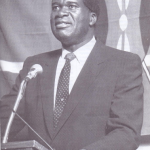
Lukowa Titi was in a situation similar to that of Mwangale. Under the watch of a powerful government not afraid to flex its muscles, he needed to: manage tensions back home as he was their leader, preserve the dignity of an institution (in his case, Bukusu culture) and to save his own skin.
Kimilili constituency is one such place whose politics has crystallized into a distinct persona. Bearing the burden of history as a loci for missionary activities that saw early educational opportunities for the locals, Kimilili has gifted men and women of great repute in all fields ranging from politics, academia, agriculture and culture..
Wakifumbusia: You can run, but not hide
One common trait among politicians from the land of Chief Amtalla, is that they all take no prisoners. Take the case of 2022 Kenya Presidential elections hopeful Dr. Mukhisa Kituyi. The former two term UNCTAD secretary general when running for parliament in the 90’s earned himself the cheeky pet name wa’kifumbusia.
Kufumbusia in Lubukusu refers to the act by which hunting dogs ruffle the bushes to scare their prey from their cover.
Wa’kifumbusia therefore is the hunter who forces the prey into the open, before going for the kill. You can imagine the audacity of Dr. Mukhisa using such a campaign slogan, especially when one considers who he was running against: none other than Elijah Mwangale.
At the time, Mwangale was a larger than life personality: a powerful KANU stalwart and a doyen of Bukusu and Mulembe politics. Besides, he had been a cabinet minister for close to two decades.
In response to Mukhisa’s challenge, not to be startled easily, Mwangale in his typical self absorbed mien went beyond his tried and tested ‘Bwana Kiko’ persona. For those who don’t know, early in his political life, ‘Bwana Kiko’ in reference to his flamboyant use of the smoking pipe, was exploited by Elijah Mwangale’s campaign to paint him as suave and elitist.
With his education, white wife and smoking pipe, Mwangale was simply, above the villagers. Thus, the villagers deserved to be led by him. So when an equally educated, white wifed and suave Mukhisa came for his seat, it was fire for fire.
Mpende msipende, Kiko ataingia bunge
Just like his contemporary Pius Masinde Muliro, Mwangale used the kiko (smoking pipe) as a symbol of sophistication and power. Moreover, for the son of Zipporah and Phillipo Mwangale, this self-assuredness didn’t stop there; for Wasike Mwangale further assaulted the imagination of the electorate with a flagrant campaign slogan:
“Mpende msipende, Kiko ataingia bunge.”
Elijah Mwangale’s campaign refrain is his debut run for election as Member of Parliament Bungoma East Constituency
I don’t know about you, but the vulgarity of the slogan above, my lord! When a Maragoli says “uyanze usuri” it means things are elephant. When an Englishman says “like it or not”, be assured a tsunami is coming your way.
Either way, in one way or another, from Mwangale to Didmus, the history of Kimilili politics is one filled with callous men who have taken liberty to re-imagine the Bukusu proverb: Namunyu kabolela libale ali wakhasila waulile.
In this proverb, the tortoise says to the rock, even if you pretend not to have heard, you have heard.
Applying this proverb to the history of Kimilili politics, every one of those who has become successful has had the same arrogant outlook. To anyone involved, the electorate and their competitors, the message is singular: Whether they remain quiet or chose to speak, they have heard.
Before we go, we must put in a few words on the grandfather of modern Kimilili politics, Pascal Nabwana.
Pascal Nabwana, the history of Kimilili politics and national politics at large
Indeed the history of Kimilili politics begins with Pascal Nabwana, a larger than life omuyemba gentleman whose good looks and gentlemanly ways were quite the talk of town, and beyond. As far as politics goes, it is Pascal Nabwana who:
- Mentored a young impressionable Sylvester Wakoli Bifwoli who in his tender youth served as his porter cum aide.
- When all seemed lost, gave the late doyen of Kenyan politics, Pius Masinde Muliro, a chance at life by offering him a scholarship sponsored by the colonial Kimilili municipality to study in South Africa.